Communication before correction
Behavior is information. A label can end observation just when it should begin.
Watch what happens before deciding what it means
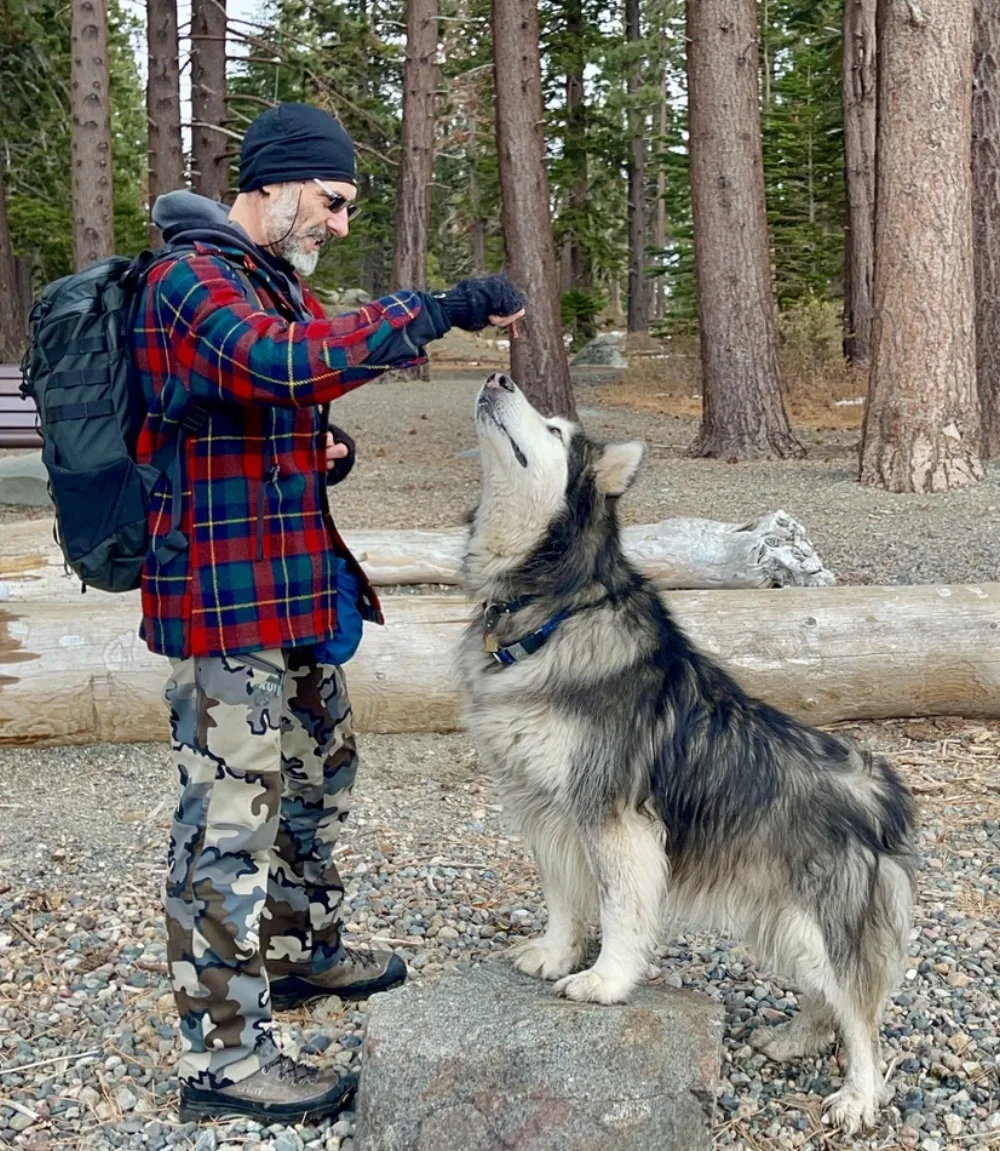
A dog’s posture, movement, gaze, distance, tension, and response to the environment can tell us more than a story about being “stubborn,” “guilty,” or “dominant.” Meaning comes from the whole sequence: what happened before, what the dog did, and what changed afterward.
The goal is not to romanticize every behavior. Dogs need safety, structure, clear skills, and consistent boundaries. Observation makes those things more precise because it replaces a motive we invented with a pattern we can actually address.
Context changes the conversation
The same visible action can have different causes. A dog may be responding to excitement, uncertainty, fear, frustration, pain, a learned history, or something valuable in the environment. Serious or sudden behavior changes belong in conversation with a veterinarian or appropriately qualified behavior professional—not inside a one-size-fits-all theory.