Oliver StarrThe Wolf Guy

Wolf behavior · Field science · Perspective

The alpha
wolf myth.

In popular culture, an “alpha wolf” is the toughest individual—the one who fights his way to the top and keeps the pack in line through dominance. That picture is misleading. A typical wild wolf pack is a family, and the adults guiding it are usually the parents.

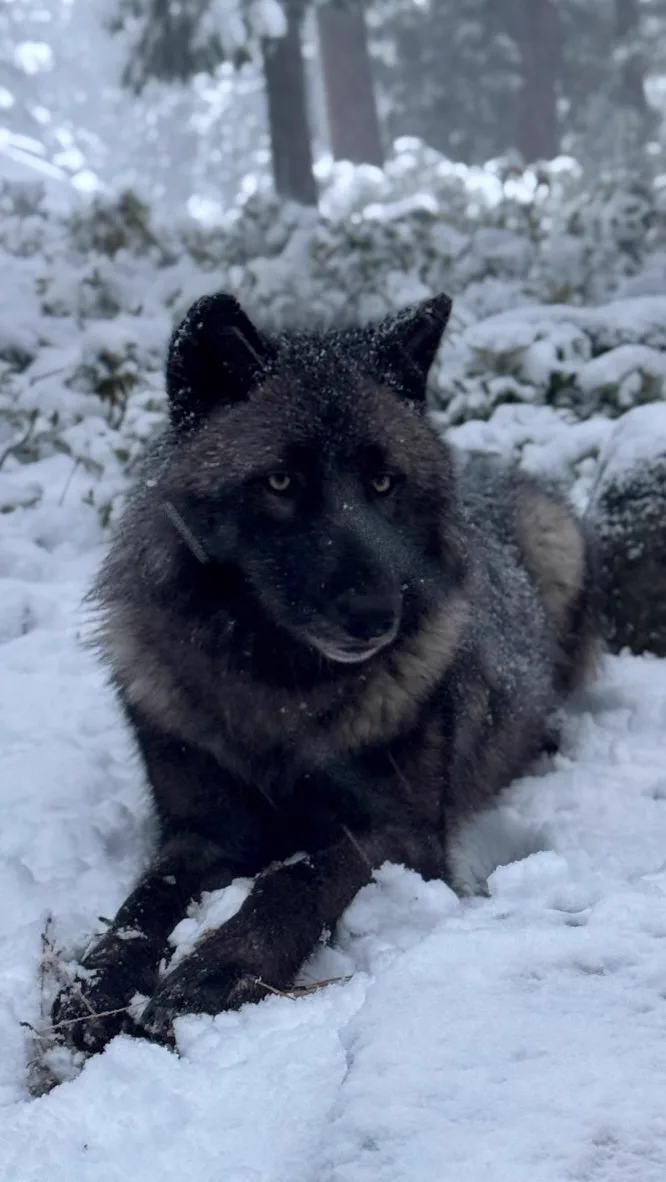
Dark-coated wolf resting in falling snow
The familiar symbol becomes more interesting when we look closely at the animal itself.

What does “alpha wolf” really mean?

In most wild packs, the so-called alphas did not win a tournament for control. They formed a family and became its parents.

Wolves do show dominance and submission, and some packs are more complicated than a single breeding pair and their offspring. But the familiar story of unrelated adults locked in a constant struggle for rank came largely from studying artificial groups of captive wolves—not from the ordinary structure of a family living in the wild.12

Captivity made competition easier to see. Field observation made family easier to understand.

A captive group is not the same as a wild family

Early descriptions of wolf hierarchy were heavily influenced by captive groups assembled from wolves that were not living in their natural family units. Put unrelated animals together in a confined space and status contests can become unusually visible. The observations were real; the mistake was treating that setting as the universal blueprint for wolf society.

In 1999, wolf biologist L. David Mech drew on published research and 13 summers observing free-living wolves on Ellesmere Island. He concluded that the typical pack is a family in which adult parents guide the group through a flexible division of labor. The U.S. Geological Survey’s record of that peer-reviewed paper explicitly contrasts free-living packs with the “non-natural assortments” used in much earlier captive research.1

The useful correctionThink “parents guiding a family,” not “bosses ruling by force.”

Does dominance disappear from the picture?

No. Replacing one cartoon with another would not help. Wolves communicate priority, deference, boundaries, and social status. Parents are naturally dominant to their offspring, and wild packs sometimes depart from the simplest family pattern. What changes is the frame: dominance is one part of a living relationship, not proof that every pack is a ladder topped by the most aggressive wolf. The National Park Service describes natural packs as family units while acknowledging both dominance cues and variations in pack structure.2

“Alpha” still appears as shorthand in research, wildlife management, and public conversation. The problem is not the word by itself. The problem is the baggage we attach to it—the idea that leadership naturally belongs to whoever can intimidate everyone else.
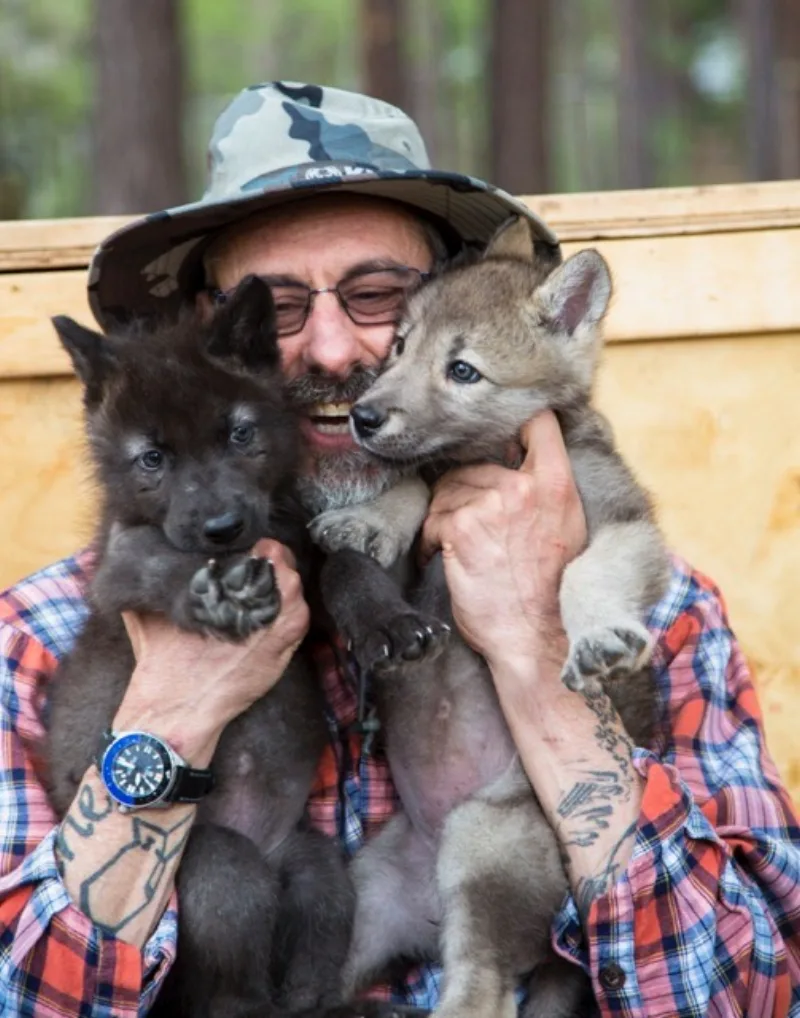
Let the wolves correct the metaphor.

For more than four decades, wolves have kept teaching me the same discipline: pay attention to the animal in front of you, not the story you expected to find.

That is why the alpha myth matters to my work. When we begin with a false picture of wolves, we carry the distortion into the way we talk about authority, teams, and dogs. The better question is not, “Who is powerful enough to dominate?” It is, “What allows a social group to function, adapt, and care for its own?”

Leadership is not a wildlife fact

Wolves do not hand us a management system, and a wolf family should not be turned into a simplistic business diagram. What the science can do is remove a bad justification. Command-and-control leadership is not validated by the claim that wild packs are ruled through constant intimidation. Oliver develops that human lesson more fully in his TEDx talk, “Defanging Alpha.”

Dogs are not wolves in our living rooms

Dogs and wolves share ancestry, but a dog-human household is not a captive wolf enclosure—or a wild wolf family. Treating ordinary dog behavior as a bid for “alpha” status can push people toward confrontation instead of careful observation. The American Veterinary Society of Animal Behavior cautions against dominance-based explanations and recommends reward-based training methods.3

Oliver’s book, The Wolf Lover’s Guide to Raising Dogs, explores the wolf-dog-human relationship without pretending the species are interchangeable.

Read the evidence

  1. 01
    L. David Mech, “Alpha status, dominance, leadership, and division of labor in wolf packs,” Canadian Journal of Zoology 77 (1999): 1196–1203.U.S. Geological Survey publication record
  2. 02
    “Wolf Ecology Basics,” National Park Service.Read the institutional overview
  3. 03
    American Veterinary Society of Animal Behavior, position statements on dominance and humane dog training.Read the position statements

Defang the myth.
Rethink leadership.

Oliver turns wolf science, lived perspective, and memorable storytelling into talks that stay with an audience.